Showing posts with label CDs. Show all posts

Thursday, July 31, 2014

Rank 'em: The Pretender, Jackson Browne

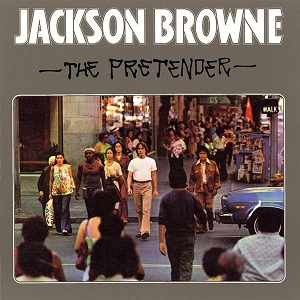
Yesterday we way back, 1969 in fact, to look at the classic Abbey Road. Today the mix yielded something just a few later but very different: Jackson Browne's fourth album, The Pretender, released in 1976.

By this time, Browne had developed a reputation as perhaps the best example of songwriting in the "California" style of the '70s that would be perfected by the Eagles (who he was close to and contributed a major part of the credit for their breakthrough hit, Take It Easy).

Browne wrote catchy-ass tunes, and backed by the studio musicians who would sometimes be most of a fringe group called The Section, he had a distinct sound. Most folks today might find it a little dated, but two things endure about Jackson Browne: 1, he wrote a TON of hits, and 2, women swooned over this guy. Some of us considered this inexplicable, kind of the way we evaluate John Mayer today.

One girl I was really interested in, Shirley, was a music major in college. She liked Jackson a lot more than she liked me. I bought her a JB songbook, which she liked. More than me. Another girl I liked, Lynn, was even more enamored with him. Later, when rumors came out that he had been physically abusive, I hoped it wasn't true, because I hate people who hurt women, but it took some of the sting out of constantly ranking behind this mopey long-haired German-born star.

Complicating matters was the fact that I really liked his music, though. His first scores, Doctor My Eyes and Rock Me On The Water, took him from acclaimed songwriter to big star. People who weren't around in the 70s don't realize how big he was. With The Pretender and then Running On Empty in 1977, Jackson Browne was about as big a star as their was in the rock world. The Eagles were bigger, as was Elton John, the Stones, Led Zeppelin, the Who... but after that, he was way, way up there.

The first album of his I bought, and to this day my favorite of his, is The Pretender.

The album opens with The Fuse, a tone-setter for the dominant mood of the album's eight songs. Some lyricists just free associate and that's their "art." JB would go on in the 70s to be one of the leading voices of social activism for a number of issues, and he's pretty clear in The Fuse about what's on his mind and what he's going to be talking about for the time it takes to get through The Pretender:
Whatever it is you might think you have / You have nothing to lose / Through every dead and living thing / Time runs like a fuse / And the fuse is burning / And the earth is turning. 
The almost six-minute long song starts slow but winds up with a long instrumental workout as it builds toward the end. Very nice bit of music.

Browne's 30-year-old wife had committed suicide just a few months before the release of The Pretender. For a writer who focuses so much on lyrics, there's obvious pain and searching throughout the album. A generation of teenage listeners could easily find some common ground with the earnest questions JB seemed to find unanswered throughout The Pretender.

This is especially true on the second song (as well as the title cut). Your Bright Baby Blues tackles a lot of topics: Loss, longing, love, loneliness... even drugs and spirituality make guest appearances. It's a beautiful song (lyrics here). The girls probably wanted to wipe away JB's tears. The guys wanted to say "Umm, you can wipe away MY tears."

The next song, Linda Paloma, is kind of a head-scratcher. It's fun, but it's very... Mexican. I mean that positively. In the 70s there just was almost nothing like it, outside of regional acts like Freddy Fender or the Texas Tornados. The charm is that it introduced a new cultural experience to listeners who probably had never heard mariachi music before. It works, but it's certainly a stretch.

Here Comes Those Tears Again was perhaps his biggest hit from the album. It was given a co-writer credit to Nancy Farnsworth, the mother of his late wife. Obviously poignant, although the song deals with a relationship gone wrong and not overtly about the tragic suicide of his wife. Still, anyone who's had to deal with relationship shit can relate.

The second side of the album (I'm going to keep using this info when albums where the "thing") began with my favorite song on the disc, The Only Child. There's so much wisdom in this song... it reaches into your heart and holds you close. The album's cover art had JB walking across a crowded LA street; the flip side had a small child running through the surf on a beach. I wondered if that was JB's young son, then not yet three. JB was a single dad now. The song begins with the lyric "Boy of mine..."

I tried to find the perfect excerpts from this song, but couldn't... because it's front-to-back meaningful. So read them all.

JB fans won't need to click that link, because they probably already know them all. They're just looking for another lonely child.

Daddy's Tune starts kind of sad, about the age-old story of generational/parental conflict. The lyrics tell of JB lamenting a rift with his father, or a father... how hard it was to communicate. But the song kind of pivots to a romp, and the lyrics turn to an acceptance of the wisdom gained only through time.

The upbeat end is welcome, because it won't be found on the next song, Sleep's Dark and Silent Gate, which would make Morrissey suicidal. The final verse offers no real respite:
Sometimes I lie awake and wonder / Where the years have gone / They have all passed under / Sleep's dark and silent gate
There is a tiniest bit of good news: The song's only 2:37 long. A good song, but not a happy one.

The Pretender closes the album, and it's classic JB. The big difference is that in almost all the songs on the album, JB talks about personal traumas and concerns. Even though the title track is spoken in first-person, it seems to be more about everyman than just the singer. The song talks about the emptiness of consumerism and capitalism... living to work, instead of working to live. A guy named Bruce Springsteen on the other coast was tapping into this hopelessness at about the same time.

The final lines describe the acceptance, the assimilation, that so many Americans just give in to. Still relevant almost 40 years later:
I'm gonna be a happy idiot / And struggle for the legal tender / Where the ads take aim and lay their claim / To the heart and the soul of the spender / And believe in whatever my lie / In those things that money can buy  / Thought true love could have been a contender / Are you there? Say a prayer / For the pretender / Who started out so young and strong / Only to surrender.
Powerful.

Jackson peaked with this album, for me at least, although he'd have a great followup that probably sold more, and a few more hits. But this album scores and soars across the board.

This one's tough to score. I had it pegged below 4-6 originally, but am instead going to move it to No. 4 because of its thoughtful messaging and the fact that Nilsson and Tom Tom Club are kind of lightweight. Let's update the rankings:


1. Abbey Road, The Beatles
2. Sandinista, The Clash
4. The Pretender, Jackson Browne
5. Nilsson Schmilsson, Harry Nilsson
6. Tom Tom Club, Tom Tom Club
7. Son of Schmilsson, Harry Nilsson
8. 311, 311

Sorry, 311.

Rank 'em: Abbey Road, The Beatles


No. 1.

OK, I mean... the list is only seven items including this one. Of course this is going to rank No. 1. Let's just update the list, then I'll get into specifics:

1. Abbey Road, The Beatles
2. Sandinista, The Clash
4. Nilsson Schmilsson, Harry Nilsson
5. Tom Tom Club, Tom Tom Club
6. Son of Schmilsson, Harry Nilsson
7. 311, 311

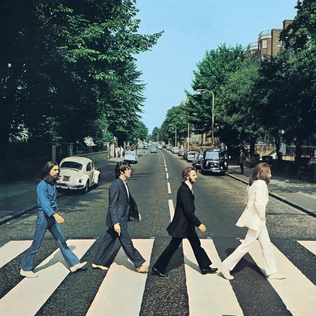
This was the last album the Beatles recorded together. Although Let It Be was completed mere weeks before they hit the studio in 1969 for what would become Abbey Road, the band released this album in October 1969 and Let It Be in May 1970.

If anyone's seen the movie of Let It Be, it's a sad peek at the disintegration of the greatest rock band ever (and what is almost certain to remain the greatest rock band of all time).

This album is the first Beatles album I purchased. Of course it has great sentimental value but it's truly an amazing work of art across the board. The Beatles had nothing to prove by 1969. They were so far beyond what any group would ever experience. Every breath was pioneering.

Some people like to argue how great the Beach Boys were. Good band, but they never grew. The Beatles could have cashed check after check after check signing variations of "She Loves You" but they kept pushing themselves and the form. It's kind of astonishing to think that if they'd never existed before today and started releasing their music, they'd be every bit as critically acclaimed and commercially viable as they were 50 years ago. The music is timeless -- very few bands release anything as good today, and none better.

The album opens with Come Together, a Lennon piece with a funky vibe and obscure lyrics that seemed to be a continuation of the heavy themes first tackled on the White album. The Beatles' incredible versatility is on display here. The darkness hinted at in the album opener would be revisited in a couple of other songs, but interestingly, there's more light than dark on this album. But it was a dark time. 1968 had seen political assassinations, the widening of the war in Vietnam, the election of Nixon, and 1969 brought more. Yes, you had Woodstock. You also had Altamont. And Charlie Manson, the band's worst fan.

A great, intriguing song.

Something was a revelation that showcased the burgeoning songwriting skills of George Harrison. Two of his greatest compositions would have hallowed places on this album. George had contributed a few excellent songs through the years -- Taxman, If I Needed Someone, While My Guitar Gently Weeps leap to mind -- but anyone would remain dwarfed in the enormous shadow that was Lennon-McCartney.

But Something hinted at the creative strength Harrison had developed and would soon reveal with All Things Must Pass.

George was never a fantastic songwriter. But he was good and Something was the best thing he'd ever done... until it was eclipsed five songs later on Abbey Road.

Paul's first song on the album, Maxwell's Silver Hammer, was by some accounts a pain in the ass. Perfectionist Paul apparently could not be satisfied with the cut, and the already tense situation among the bandmates was not eased by recording this one. The final piece has some great George Martin touches... the final verse has an incredible organ countermelody embedded; sublime. I am drawn to it every time.

This is without a doubt the best song about a serial killer ever written. So dark... but Lennon called it "granny music." When I had a few days as a substitute music teacher, I should have played this for the kiddies.

Paul has then and since caught a ton of shit for being Paul. If anyone tells you Paul McCartney is a lightweight or can't rock, play them Oh Darling. Then tell them to shut the fuck up.

Story goes that Paul smoked up and worked to rag out his voice to record the vocals for Oh Darling. He rips it, hard. The tune is catchy enough, but it's Paul's vocals that make this song. The music itself is kind of simple. Granny music my ass. Paul is an elite talent and wrote a ton of superb songs, many that rock really hard (Helter Skelter, Why Don't We Do It In The Road). Macca kicks major ass with this one.

Ringo even got a winner on this album. Octopus' Garden is credited to Ringo, and to this day remains one of the most delightful, fun songs ever written. Kids love this song. Even old kids. Starr's persona as the happy-go-lucky guy was confirmed with Garden. No one doesn't like this song.

My favorite track on Abbey Road closed side one of the "album" -- I Want You (She's So Heavy). This is a Lennon "love song" to Yoko and it's also so heavy, and very very dark. The repeated phrasing and playing drones on and on, carrying the listener away on a scary late-night ride. You can't stop. You don't know where you're going. You don't know if it's going to be OK. But on you go. The pace picks up. The focus narrows. The sound grows louder and louder and louder. Still you go.

This song is about as far from the silly love songs of 1962 that one can go... a complete 180 from the lightness and sunshine that the band hit with just a few years prior. In a lot of ways this song echoes the transfer from hope and optimism of their early songs and JFK-era positivity to the mood in 1969 of the end of the hippie dream, the dark side of drugs, war and violence... It's probably the Beatles' most underappreciated masterpiece.

As the song unrolls over almost eight minutes, the listener wants to grab hold of something for the coming impact. So of course, the song ends with a sharp cut and you're left to figure it all out all by yourself. And then the album side was up.

It was incredibly harrowing and jarring. The album was released just weeks after the Manson murders. I had just enough inkling of the times to know that there was a mood of things getting black and bad, and no one who thought they had the answer of peace and love felt so sure any more. The song slams against the wall, it's over, and further, you have to get up and turn the album over. I Want You (She's So Heavy) is perfect on many levels. John always did want people to think.

Flipping the album, George was back and the atmosphere lightened completely. Here Comes The Sun was the hand held out to pick you up from the wreckage of I Want You (She's So Heavy). For all the incredible, sweet charmers that Lennon and McCartney had produced, George played this card and stunned the world.

This is such a happy, hopeful song. As I write this now, and through many listens in my life, I often tear up at the simple beauty of this song. In My Life does it to me every time, too.

George didn't write many songs as good as this in his post-Beatles work.

Sometimes I wonder what we all lost when those cancer sticks took George, or that asshole took John. Whatever it was, it was significant.

Throughout Abbey Road, the Beatles seemed to put aside their issues with one another and a world that just wouldn't let them be just long enough to show everyone how magical their collective gifts were.

The harmonies on Because, set against the backdrop of Martin's harpsichord, are breathtaking. In a way, that blend of voices from John, Paul and George were one of the band's greatest achievements.

The beauty continues with the next 16 minutes of song snippets that were incredibly fused by the band and the genius Martin. You Never Give Me Your Money's sensitive piano opening, augmented by soulful guitar accompaniment and Paul's lovely lyrics... so pretty. And then the song shifts gears, getting jazzy and upbeat, before closing with some tasty drumming by Ringo, an epic guitar signature by George, and then as the song fades with the countdown verse ("1,2,3,4,5,6,7, All good children go to heaven"), some kickass soloing from John.

The song blends into a John piece, Sun King. It's kind of a playful workout, but things come fast and furious from here on in... King is followed by Mean Mr. Mustard, another typically quirky Lennon piece, as is Polythene Pam. John was into the Yoko thing and pretty fed up with the Beatles trip, but the old soul had plenty left in the tank when he wanted to kick out the jams. This was John's band, after all.

The entire sequence lets everyone show off a bit, and then they hand the thing off. It works. After a nice jam to end Pam, Paul takes the baton with She Came In Through The Bathroom Window. Guitars carry the song, and Ringo drives the bus.

Ringo is so underrated. The Beatles probably still would have been huge with Pete Best. But Ringo was the even-handed backbeat that kept it all together. In a few minutes, he'd get his due.

Golden Slumbers is next, after a somewhat conventional "end" in the run with Window.

Did Paul know it was over? I think what makes us fans ache at the end of this band was the things they seemed to tell us as Abbey Road wound down. The lyrics for Slumbers ("Sleep pretty darling do not cry / and I will sing a lullaby") and the next song, Carry That Weight, seem to be saying goodbye.

But they weren't going to end it on a downer.

The End is a kickass jam, begun by Ringo's amazing drum solo. Then Paul, George and John play solos. Epic solos.

I mean... these guys could do anything.

And of course, they wrap the song with some of the most quoted lyrics of all time, delivered in that astonishing three-part harmony: And in the end, the love you take, is equal to the love you make.

As we catch our breath, they send one last kiss: A cute little snippet called Her Majesty. 

And then it was over. By the time Let It Be hit a few months later, the band was done, and everyone knew it, although no one wanted to believe it.

I rank my songs on iTunes. I gave Her Majesty four stars out of four; everything else gets five. This album is one of the greatest pieces of art ever gifted to humanity.